Thursday, 26 February 2015

Disclosure

Dana Teen Lomax.
I'm not going to lie, when I first picked up and browsed through this book, Disclosure, I felt like I had been cheated of my money.
But as I kept looking, the book kind of grew on me. It reminds me of the last book we read, 25000000 million things about me too, or whatever it was called--in that it's all about openness.
The different images give a broad idea of what kind of person Ms Lomax is like. her accomplishments, her failures and therefore her aspirations. I was kind of shocked that the documents blatantly showed her phone number and other personal information (and I wonder if she had everything changed after she published this). I'm not a very open person--at least with people I don't know well--so this kind of piece is something beyond my range of comfort. 2500 things certainly was. I'm not sure how I feel about people sharing the intimate details of their life. But this one I didn't think went too far. I can't say I'm going to put together a collage of private documents as a project in the future, but Disclosure certainly an interesting idea.
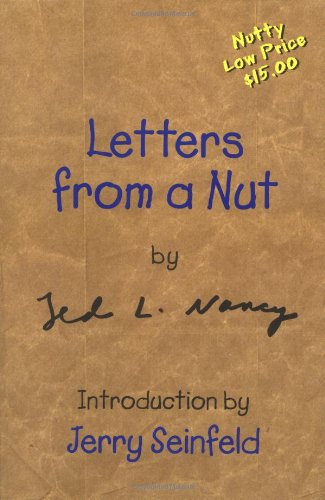
This also reminds me of a fun book I found at the library once called Letters From a Nut
http://ecx.images-amazon.com/images/I/517fNQ9w%2BQL.jpg
This book is awesome. Find it. Read it. Some guy sends satirical letters to businesses and their responses are just golden. One of them he informed a hotel that he lost his ancestral sword in their lobby. But that's beside the point!

I like dragons

I really do.  Here's a less-than-endearing poem about a dragon.


The Dragon
Can you find the dragon on this page?
Its scales are haggard and sharp
like diamond sandpaper
its teeth long and putrid
vile stench escapes its maw
fire gushes from its throat
blue orange red
its tail thrashes, strong and crushing
it never stops
is unconscious of others
The dragon stretches forth its talons
scratches the earth, tears up swaths of land
smoke billows from its nostrils, choking the sky
Its voice bellows loudly, flouting in and behind
our backs
Its only interest in others is
self interest
The dragon catches its prey
devours without relent
but leaves the carcass intact as
a warning
The dragon loves gold
collecting through pillaging, knives and dice
it is slothful
the rise of the sun is only a token
to be ignored
night is its kingdom
and the street corners its den
The dragon's thirst is insatiable
for stones and wine and flesh
Its wings cover the sky
membranes that unfurl over nations
sweeping women off their feet and
whisking children away
The dragon lurks in caves and caverns
behind glowing screens and beneath fumbling fingers
The dragon snaps up what it can
stealing rings, eyes, limbs and dreams
The dragon's spines shine like silver
rammed out of the earth
waiting to be worshiped.

The Dove and the Snail


So once upon a time I drew this silly thing when I was bored in class.
It looks slightly different in pencil, but I highlighted it to be able to see it easier.
It was supposed to be a dove (yipes!) but if you look closely, it kind of looks like a snail too.

So I wrote a poem about it!
Instead of paying attention in class...
It has high potential, methinks, but needs some serious revisal.
A draft therefore! Thus and thusly.

The Dove and the Snail
Is the dove a noble creature?
Is the snail a useless pest?
The dove with her wings to fly
the passion of her dreams driven by her
own desire
unknowing, unwilling to see her own beauty
blissfully unaware of the purity of her own feathers
a simplistic animal with simplistic desires
But the snail
with his fortitude wrought upon his back
confident and purposeful
Vigilant and unyielding, paving a silver path
despised at times, but relying upon his own merit
Sometimes it becomes clear
The dove is the snail and
the snail the dove

Voices

Here's a poem.  Here it is.


Voices
Let me ask you something
What did you feel?
What did you feel when you killed them?

In the shed behind the barn
while they were busy doing
chores, fetching the shovel

What went through your mind?
What were you thinking?
Could you think?

Your hands tremble now
despite being laced together
were they trembling then I wonder

Trembling when you stole the shovel away
I see your tears now
Like a shattered mirror

What could they have felt then?
You were there
please tell me

Were there tears in their eyes?
Were they crying like you are now?
Who is in more pain?

They're gone now, you know this
no amount of sorry, bribery or begging
for forgiveness will bring them back

They were not yours to take, but neither
were they mine
They were God's

And only He knows where they are now
I cannot say whether
they are in a better place

But one thing I can say, as I stand here
watching you
collapsing under my gaze

broken and feeble, like the bones
of those two
Splintered within yourself

The voices may call out now
but they will be silent still
hush now, you've made a mistake

Hush now, I forgive you.

Tuesday, 24 February 2015

Archetypes

We learned about Archetypes in Psychology.
Here's a draft poem, about archetypes.


Archetypes
Quasi-living entities existing in our collective stream of consciousness
like, the archetype of the child god
or like the archetype of the disapproving father
like the archetype of the woman
wondrous in beauty
or perhaps the archetype of the man who falls for her
the archetype of the kingdom besieged by war
like the archetype of relinquishing the crown
or perhaps of the bended knee
the archetype of the scars left by fingernails
similar to the archetype of knife wounds
of late-night whiskey
of pickaxes, pikes and pistols
of falling fire, burning brandy
of turpentine, arsenic, bleach and chlorine
Recurring images within our ancestral unconscious past
like the archetype of the god who dies for your sins
and of salvation, only for a few

Thursday, 19 February 2015

2500 Random Things About Me Too

Original post title, ho!
I always hate that these kind of books, which were written in a specific style, don't really reveal within the pages what that style is.  Or maybe they do, and I just don't notice.
Eh.
At any rate, I was pretty confused until I looked up the idea behind this book, 2500 Random Things About Me Too.  Essentially a meme that somebody continued everyday for the next forever involving exactly what the title suggests: writing 25 random things about oneself.
That being clear to me, I found the idea of the book rather interesting.  It jumps around, ranging from simple and pointless to profound and sensual.  It's didactic in a way, but because of the way the the random things flow into one another, it's also very smooth and organic.  It's very similar to Hejinian's My Life, I'd say in an even freer form.  Hejinian's seemed written for a very distinct purpose; while it's also 'scatterbrained' and somewhat distant, the poet seems to have a central idea or voice in mind.  in 2500 Random Things, it's just free-flowing mental output, as it were.
Another curious aspect is how self-aware the random things are. The small narratives are interrupted once and a while with simple observations to the reader, like, "yes, she drank a lot," "That's not heartwarming at all," "nonsense," and (ironically) "I don't like how this is starting to get narrative." The poet takes a quick moment to answer questions we may or may not have had.
Those are my thoughts for now, but I always write these things before class, and come away with more thoughts or opinions afterwards.  Should I do it after, before?  Befafter? Afterfore?
Honestly, that the book is so incredibly long seems unnecessary to me.  I like the format in which it is printed, but do we really need so many random facts? That's one thing I've never really understood about poetry in general. I like the idea of chapbooks, and a collection of one's works are fine, but a zillion pages devoted to a singular idea, or style?  Hmm.

Saturday, 7 February 2015

In the life that could have been

I don't like the title.  Oh well.
Inspired by Jen Currin's "The Story of the Rifle."


In the life that could have been
If not for an innocent question

Their time together was brief, but still he asked the question:
“Will you marry me?”

A well-attended marriage, happy until the moment
when she slapped him for his thoughtlessness

“I’ve told you before,” she said with a scowl, holding a spatula.
“I’ve never liked curry, and I never will.”

At work they scoffed at his eye, blood-red from a burst vessel
“Take it easy in football,” they said.  He only smiled.

“I don’t play football, and I never will.”

The door slams closed, palms hit the table.  Sweat dripping down.
His gaze follows her, and he wonders which knife to use to cut his steak.

The thought swirls through his mind.  A question how.
How a simple dance could be so devastating.

When she comes home, he asks the question.
The same he had, to first entice her.

“Will you dance with me?”

Thursday, 5 February 2015

The Moon is Sinking Fast

Here's one product of the film found poem I mentioned here:


Each stanza is taken directly from the list, in order to preserve the natural narratives.
With movies being nothing more than stories, I thought it was interesting how each stanza seems to give birth to it's own sort of tiny story.  It's only a glimpse, but my mind tries to fill in the blanks of each line, to explain why a character would be saying these things.  I'm actually very fond of the result.


The Moon is Sinking Fast
 

They were off my path, so I never dared
Well, you’re going to have to decide
What’s more important, baby?
Well, this is inhuman—even for you

It’s not quite what I expected
Hey, don’t ask me about my life
I travel light, only the barest essentials
Come back

Are you paying attention?
His parents died last year
Hey, let me read that
You seriously don’t think I did this?

I love you.
Over here
That’d be the one
What are you doing here?

I’m lucky to have you
Stop the cars
It’s going to be okay
Come on, don’t talk about it

Is that a threat?
You seriously don’t think that qualifies you as a certified prodigy?
That wasn’t an accident
What makes you think they’re even from here?

We’ve got to present this properly
We are not dead
Are you recording?
Some advice about keeping secrets: it’s a lot easier if you don’t know them in the first place

Too much?
These children are starving
Her arms aren’t swinging—she’s carrying something
Put your arms behind your back